

which of the following media is the most common of all drawing media?
Section 10: Painting and Drawing
► Pigments
► Water-Based Paints
► Non Water-Based Paints
► Airbrush, Spray Cans and Spray Guns
► Dry out Cartoon Media
► Liquid Cartoon Media
The health hazards associated with painting and cartoon have been known since Ramazzini described such illnesses in 1713. Working safely tin can involve changes in how y'all select your art materials, and how you handle them.
Pigments
Painters utilize pigments in oil paints, acrylics, watercolor paints, gouache, encaustic, affiche paints, casein paints and tempera. Sometimes commercial paints such as oil, enamel, epoxy paints and automobile paints are used.
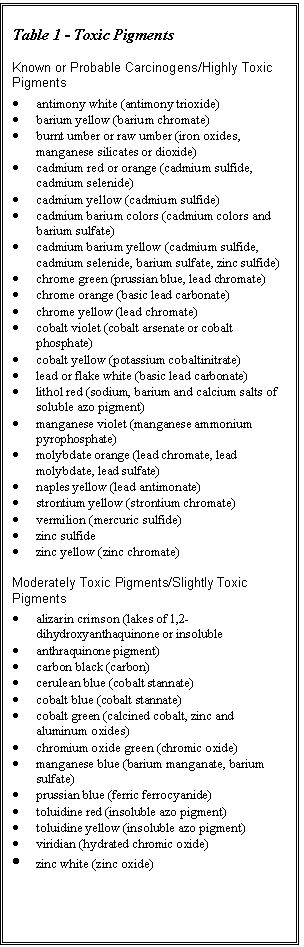
Paints are pigments mixed with a vehicle or binder. Both inorganic and organic pigments are used as colorants. Dry out pigments are specially hazardous because they are easily inhaled and ingested. They are used in encaustic, paper-marbleizing and in the fabrication of paint products, and volition exist discussed more thoroughly in the section below on pastels.
Pigments vs. Hues
Most paints used in Visual Arts do not contain metallic pigments and are considered non-toxic. These are nearly easily identified by the product name. If the pigment is described as hue, such equally "chromium yellow hue", in that location is no (or likewise lilliputian to exist concerned most) toxic metal contained in the product.
Hazards
- Poisoning tin can occur if toxic pigments are inhaled or ingested. The main hazard in standard painting techniques is accidental ingestion of pigments due to eating, drinking or smoking while working, inadvertent hand to oral cavity contact, or pointing the paint castor with the lips. If methods such every bit spraying, heating, or sanding are employed then there is an opportunity for inhalation of toxic pigments.
- The classic example of a toxic inorganic paint in painting is white lead, or flake white (basic lead carbonate). Pb pigments can cause anemia, gastrointestinal issues, peripheral nerve damage (and brain damage in children), kidney damage and reproductive system harm. Other inorganic pigments may be hazardous, including pigments based on cobalt, cadmium, and manganese. (See Table 1)
- Some of the inorganic pigments, in particular cadmium pigments, chrome yellow and zinc yellow may cause lung cancer. In addition lamp black and carbon black may contain impurities that tin can crusade skin cancer.
- Chromate pigments (chrome xanthous and zinc yellow) may crusade skin ulceration and allergic peel reactions (such equally rashes).
- The long-term hazards of the modern constructed organic pigments take non been well studied.
Precautions
- Obtain MSDSs on your paints to find out what pigments y'all are using. This is especially important because the name that appears on the tube of color may or may not truly represent the pigments present. Manufacturers may keep the name of a colour while reformulating the ingredients.
- Apply the least toxic pigments possible. Practise not use atomic number 82 or carcinogenic pigments.
- Avoid mixing dry pigments whenever possible. If dry pigments are mixed, do it inside a glove box (a box with a drinking glass or plexiglas top and holes in the sides for artillery) or inside a laboratory-type fume hood.
- Wet mop and wipe all surfaces when using dry pigments.
Water-Based Paints
Water-based paints include water color, acrylic, gouache, tempera and casein. Water is used for thinning and cleanup.
Hazards
- Come across department above for pigment hazards.
- Acrylic paints incorporate a small amount of ammonia. Some sensitive people may feel heart, olfactory organ and pharynx irritation from the ammonia. Acrylics and some gouaches comprise a very pocket-sized amount of formaldehyde every bit a preservative. Only people already sensitized to formaldehyde would experience allergic reactions from the trace amount of formaldehyde found in acrylics. The amounts can vary from manufacturer to manufacturer.
- Casein paints apply the protein casein every bit a binder. While soluble forms are available, casein can exist dissolved in ammonium hydroxide which is moderately irritating by skin contact and highly irritating by eye contact, ingestion, and inhalation.
- All water-based paints incorporate a preservative to prevent mold or bacterial growth. Sometimes artists add preservatives when they make their own paints. Although present in pocket-size amounts, certain preservatives may crusade allergic reactions in some people.
Precautions
- See department above for precautions when mixing dry pigments.
- If you add together your own preservative, avoid using sodium fluoride, phenol or mercury compounds. For tempera, a minor amount of pine oil works for brusk periods of time.
- If you experience middle, olfactory organ or throat irritation while using acrylics, opening a window is unremarkably sufficient; if non endeavor a window exhaust fan.
- If you mix casein paints using ammonium hydroxide, yous volition need a window exhaust fan to provide ventilation.
- Wearable gloves, goggles and protective frock when handling ammonia. An eyewash fountain should exist available when handling ammonia.
Not Water-Based Paints
Oil paints, encaustic and egg tempera use linseed oil, wax and egg respectively as vehicles, although solvents are often used equally a thinner and for cleanup. Turpentine and mineral spirits (paint thinner), for example, are used in oil painting mediums, for thinning, and for cleaning brushes. Alkyd paints apply solvents as their vehicle. In addition many commercial paints used by artists also comprise solvents.
Hazards
- Encounter department higher up for pigment hazards.
- All solvents can cause defatting of the skin and dermatitis from prolonged or repeated exposure. Turpentine can likewise cause skin allergies and exist absorbed through the skin.
- Acute inhalation of loftier concentrations of mineral spirits, turpentine vapors, and other solvents tin cause narcosis, which can include symptoms of dizziness, headaches, drowsiness, nausea, fatigue, loss of coordination, coma, as well as respiratory irritation.
- Chronic inhalation of large amounts of solvents could result in decreased coordination, behavioral changes and brain damage. Chronic inhalation of turpentine tin cause kidney damage and respiratory irritation and allergies. Odorless mineral spirits and turpenoid, in which the aromatic hydrocarbons have been removed, are less hazardous.
- Ingestion of either turpentine or mineral spirits can be fatal. In the case of mineral spirits, this is usually due to chemic pneumonia caused past aspiration (breathing in) of the mineral spirits into the lungs later on vomiting.
- Natural resins (copal, damar, rosin, Japanese Lacquer) may cause pare irritation or allergies. Rosin dust can cause asthma.
- Encaustic involves suspending pigments in molten wax. If the wax is overheated, flammable wax vapors and wax decomposition fumes are produced, which are strong respiratory irritants.
- Epoxy paints consist of an epoxy resin component containing the pigment, and a hardener component. The epoxy resin may contain diglycidyl ethers which are irritants, may cause bone marrow damage, and are suspect carcinogens. Epoxy hardeners may cause skin and respiratory allergies and irritation.
Precautions
- Whenever possible replace turpentine or ordinary mineral spirits with the less toxic odorless mineral spirits. Mineral spirits is too less flammable than turpentine, since its flashpoint is over 100�F (38�C), while turpentine has a flashpoint of 95�F, (35�C).
- Utilise the aforementioned health and rubber considerations for the employ of "citrus" or "pine" solvents. These have been constitute to be quite irritating to the skin and eyes.
- If possible, artists should gear up their easel virtually 3 anxiety from a window that has a fan exhausting at work level and pulling the solvent vapors abroad from your face.
- Techniques such as turpentine washes volition require a lot of ventilation because they result in the evaporation of large amounts of solvents in a short flow of time. Acrylic paint can be substituted for underpainting.
- Ventilation only needs to be provided while the solvent is evaporating from the canvas, non during the fourth dimension while the oil paint film is drying (oxidizing).
- Wear neoprene gloves while cleaning brushes with mineral spirits or turpentine.
- Used solvent can be reclaimed by allowing the pigment to settle then pouring off the clear solvent.
- Paint can be removed from your hands with baby oil, and then soap and water.
- Wax should be only heated to the minimum temperature needed for proper flow of the paint. Exercise not oestrus with open up flame or hot plate with exposed element.
Recommendation: During pregnancy and nursing, switch to water-based paints to avert exposure to solvents.
Airbrush, Spray Cans, and Spray Guns
Artists utilize many products in spray form, including fixatives, retouching sprays, paint sprays, varnishes, and adhesive sprays. Airbrush, aerosol spray tin can and spray guns are used.
Hazards
- Spray mists are especially chancy because they are easily inhaled. If the paint being sprayed contains solvents, then you can be inhaling liquid droplets of the solvents. In addition the pigments are also easily inhaled, creating a much more dangerous situation than applying pigment by castor.
- Droplets spray paints accept an additional risk besides pigments and solvents. They incorporate propellants, usually isobutanes and propane, which are extremely flammable and take been the crusade of many fires. Other aerosol spray products such as retouching sprays, spray varnishes, etc. also incorporate solvents, propellants and particulates beingness sprayed.
- Airbrushing produces a fine mist which is a serious inhalation chance because artists piece of work so shut to their art work. Airbrushing solvent-containing paints is particularly dangerous.
- Spray guns are less mutual in art painting just ordinarily involve spraying much larger quantities of paint than either spray cans or airbrush. Spraying solvent-based paints is a serious fire risk.
Precautions
- Come across department above for precautions with pigments.
- Attempt to brush items rather than spraying if possible.
- Use water-based airbrushing paints and inks rather than solvent-based paints.
- Employ spray cans or an airbrush in a spray booth if possible.
- If ventilation is not adequate, and then respiratory protection is necessary while air brushing or spraying. Contact EHS for option and fit-testing.
- Never endeavor to spray pigment by blowing air from your mouth through a tube. This can lead to accidental ingestion of the paint.
Dry Drawing Media
This includes dust-creating media such as charcoal and pastels which are often fixed with aerosol spray fixatives, and media such equally crayons and oil pastels which exercise not create dust.
Hazards
- Pencils are made with graphite, rather than lead and are not considered a hazard. Colored pencils have pigments added to the graphite, but the amounts are pocket-size so that there is no meaning risk of exposure. Over ten years ago, a significant hazard in pencils was from pb chromate paint on the outside of yellow pencils. However this has since been eliminated as a risk.
- Charcoal is usually fabricated from willow or vine sticks, where wood cellulose has been heated without moisture to create the blackness colour. Compressed charcoal sticks use various resins in a binder to create the colour. Although charcoal is merely considered a nuisance dust, inhalation of large amounts of charcoal dust tin create chronic lung issues through a mechanical irritation and clogging upshot. A major source of charcoal inhalation is from the addiction of bravado excess charcoal dust off the cartoon.
- Colored chalks are also considered nuisance dusts. Some chalks are dustier than others. Individuals who take asthma sometimes accept problems with dusty chalks, but this is a nonspecific dust reaction, not a toxic reaction.
- Pastel sticks and pencils consist of pigments bound into solid class past a resin. Inhalation of pastel dusts is the major hazard. Some pastels are dustier than others. Pastels tin contain toxic pigments such as chrome yellow (lead chromate) which can crusade lung cancer, and cadmium pigments (which tin cause kidney and lung damage and are doubtable human carcinogens). Blowing excess pastel dust off the drawing is one major source of inhalation of pastel pigments. Pastel artists accept often complained of blowing their nose different colors for days later using pastels, a articulate indication of inhalation.
- Crayons and oil pastels exercise not nowadays an inhalation hazard, and thus are much safer than pastels. Some oil pastels can incorporate toxic pigments, but this is only a adventure past accidental ingestion.
- Both permanent and workable spray fixatives used to ready drawings contain toxic solvents. There is high exposure past inhalation to these solvents because the products are sprayed in the air, ofttimes right on a desk or easel. In addition you can be inhaling the plastic particulates that comprise the fixative itself.
- Never endeavor to spray fixative by bravado air from your mouth through a tube. This tin can lead to accidental ingestion of the fixative.
Precautions
- Use the to the lowest degree dusty types of pastels, chalks, etc. Asthmatics in particular might want to switch to oil pastels or similar not-dusty media.
- Spray fixatives should be used with a spray booth that exhausts to the outside. If employ of spray fixatives is occasional, you lot can use them outdoors with a NIOSH-canonical respirator equipped with organic vapor cartridges and dust and mists filter for protection against inhalation of solvent vapors and particulates. An exhaust fan is also needed to remove organic vapors and particulates.
- Don't blow off excess pastel or charcoal dust with your mouth. Instead tap off the built upwardly grit then it falls to the floor (or paper on floor).
- Wet-mop and wet-wipe all surfaces clean of dusts.
- If inhalation of dusts is a problem, a respirator may be advisable. Contact EHS for selection and fit-testing.
Liquid Drawing Media
This includes both water-based and solvent-based pen and ink and felt tip markers. Hazards of dry erase or white board markers can exist considered here, although they are more used in teaching or commercial art.
Hazards
- Drawing inks are unremarkably water-based, but there are some solvent-based drawing inks. These usually contain toxic solvents like xylene.
- Permanent felt tip markers used in design or graphic arts contain solvents. Xylene, which is a highly toxic effluvious hydrocarbon, is the most common ingredient; newer brands often contain the less toxic propyl booze (although it is an eye, nose and throat irritant). The major hazard from using permanent markers results from using a number of them at the same time at close range.
Precautions
- Employ water-based markers and drawing inks if possible.
- Alcohol-based markers are less toxic than aromatic solvent-based markers.
- Solvent-based drawing inks and permanent markers should be used with good dilution ventilation (due east.g. window exhaust fan).
- Never paint on the body with markers or cartoon inks. Body painting should be done with cosmetic colors.
Top of Page
Previous Section
Adjacent Section
Table of Contents

Source: https://www.baylor.edu/ehs/index.php?id=94372
Posted by: bealsgrany1997.blogspot.com
0 Response to "which of the following media is the most common of all drawing media?"
Post a Comment